Showing posts with label iOS. Show all posts

Friday, July 22, 2016

Short Microsoft FY 4Q16 Earnings and Hololens

I got a chance to talk about Microsoft following their FY 4Q16 earnings call on the CCTV America Global Business program.  I picked up on some highlights, one really positive and one negative. The short term positive story is that their cloud business is doing very well, specifically Azure. 

Azure has the most momentum of their reporting segments with the following points: 

  •  Eight straight quarters of triple digit revenue growth
  • A modified run rate of $12B in FY 2017. It was $10B in FY 2016, catching up to Amazon AWS (the industry leader). 
  • Projected $20B run rate by FY 2018. (No pressure on the Microsoft Azure sales force, right?) 

The other highlight, albeit negative (and may be inconsequential to the overall revenue picture) was that their handset business revenue dropped>70%. This wasn't a surprise as they've been on the march to unload their handset hardware business and 'rationalize' the associated workforce.  It's interesting as Microsoft's stated strategy is "Mobile First, Cloud First" in that order.  Traditionalists wonder if you have no handset to further the Windows 10 smartphone OS, how can the company really say Mobile First?  Of course they've moved office into smartphones on iOS and Android, embracing competitors but conceding to the reality that marketshare rules and they need to stay relevant there. I guess that small mobility component counts, right?  There are rumors that new smartphone hardware will come in 2017 but any longer will be a nail in the mobile Windows 10 OS's coffin.

Hololens

Though CCTA Business America focused on the Hololens story in relation to the wildly popular Pokemon Go, the takeaway for me is that the Augmented Reality category has been embraced by the consumer. While the host, Rachelle Akuffo pointed out the similarities to the discontinued Google Glass, in restrospect similar but different animals.  Glass was kind of enabling computing and having that experience on the lens. It may be the stretch would be Oculus Rift, DayDream or any other AR/VR product they're working on.

To be fair, VR and AR are still in its infancy. If one looks at how Microsoft is positioning Hololens, the company is presenting more business and scientific (e.g., NASA) applicability rather than what we immediately think of as gaming.  It's an exciting area to watch.


Thursday, February 7, 2013

Tier 1 Q4 2012 Smartphone Growth and the iPhone

Now that three Tier 1 carriers have reported their Q4 results, here are some observations and commentary on smartphone growth.  As most industry people know, smartphones are the hot user commodity. Smartphones serve many purposes from a churn reduction tool, to ARPU uplift (offsetting voice revenue decline) to increasing operational efficiency (move data consumption to a more data efficient (capacity and throughput to the LTE network). But the old 3G network also has legs so for now, wholesale (MVNOs & M2M) and prepaid can extend return on old investment there.

iPhones have been a catalyst for increased carrier data revenue. AT&T's past  iPhone exclusivity has allowed it to accumulate a massive customer base that proven to be low-churn and loyal. With the exclusivity gone, other carriers (through Apple's deal-making and carriers' realization that an iPhone is competitive table stakes) also jumped on the iPhone bandwagon.  The notion that iPhone is such a powerful sales acquisition and retention tool has played out again in Q4 2012.

For the big three, AT&T, Sprint, and Verizon Wireless, smartphones sales/activations continue to be on a positive track.  AT&T reported 10.2 million smartphone sales in Q4, while Verizon Wireless came close at 9.8 million, and Sprint posting 6.1 million. These added up to 26.1 million smartphones.  The interesting observation is how many of these smartphones were iPhones.

  • AT&T - 8.6 million
  • Verizon Wireless - 6.2 million
  • Sprint 2.2 million

As a percentage of the overall Q4 smartphone sales, iPhones activations accounted for:

  • AT&T - 84%
  • Verizon Wireless - 63%
  • Sprint - 36%
On the whole among the three Tier 1 carriers, the iPhone accounted for 65% of smartphone activations. 


Impressive stats for sure. With contenders from BlackBerry (BB10 OS), Microsoft (Windows Phone 8) and Android, can the iPhone in the U.S. continue its run?  I submit that this hinges on Apple innovation.  As I've said previously, Apple needs to innovate, as its user interface (UI) is aging with incremental innovation.  Customers have a lofty expectation of radical things for each iPhone (and iPad) model.   Apple needs to deliver in 2013 or the early adopters (and then the mainstream) will move on.   

Wednesday, November 7, 2012

T-Mobile -Thoughts Ahead of the Q3 2012 Earnings Release

T-Mobile USA is set to release its Q3 earnings and performance metrics on Thursday , November 8th as part of its overall parent's (Deutsche Telekom) Q3 2012 release.  DT's US unit is fresh off an merger/acquisition announcement of MetroPCS in October  and that had grabbed much of the news around the carrier but the Q3 earnings numbers should reveal whether T-Mobile would continue key trends or reverse them.  The company has provided five focus areas throughout previous quarters and many of its Q3 progress points will fit again in these areas.


Under Amazing 4G Services, we should expect to hear about network progress (LTE buildout) and new halo devices. Under the Value Leader, we should expect to hear about any new services or marketing initiatives. In furthering the Trusted Brand, T-Mobile has been talking about expanding their distribution. For the last two quarters, the company has been putting a lot of effort into opening new 'doors', the first fruits of this may show up in Q3.  With the Multi-Segment Player focus, this is mostly about expanding wholesale (machine to machine/MVNOs) and ramping up the B2B efforts.   Finally the Challenger thrust should roll up cost control and churn containment.  Maybe there will be light shed on acquiring iPhone switchers. However, some performance metrics continue the bellwether of corporate direction. 

Net Additions:  The trend doesn't look good for the company as its postpaid base continues on a negative trajectory since Q3 2010. On the other hand, T-Mobile's prepaid business is the bright spot in preventing a totally bleak story. The fact that the company has been able to post positive net prepaid additions in an ultra competitive prepaid segment is notable. Throughout the years, prepaid has been on the rise and makes up more of T-Mobile's customer base. In Q2 2010, the prepaid business accounted for about 20% of the base. By Q2 2012, that percentage increased to over 27%.  Q3 looks to increase that percentage.  Switching over to postpaid, the company still needs to reverse the slide.  The unlimited data and plan value story should resonate and pits the company against Sprint's own unlimited data proposition.  How well the company markets to iPhone switching will be a key element in increasing its postpaid pool.
  
Any increase should signal somewhat to the traction of its expanded distribution strategy.

Churn:  Looking at prepaid churn, the company is doing a good job in stabilizing that base.  Q3 should continue the downward direction. However, the churn number currently at 6% is very high relative to rivals.  In contrast, Sprint's multi-branded prepaid group posted 3.37% for Q3 while dedicated prepaid plays MetroPCS and Leap are in mid-3% and mid-4%, respectively.  On the postpaid side, the magic threshold for Q3 should be sub 2%. Rival Sprint crossed that mark two quarters ago. T-Mobile remains the only national carrier to be above the 2% postpaid churn mark.

ARPU: The carrier is also behind in these metrics relative to its national rivals. The downward postpaid ARPU trend is in stark contrast to AT&T, Sprint and Verizon Wireless which has been sloping positively nicely. While AT&T is the postpaid ARPU leader at over $65, Verizon Wireless is T-Mobile's closest ARPU neighbor at $56 in Q2 before they moved to the new ARPA stat. On the prepaid side Sprint remained over the $26 mark in Q3 while regional Leap and MetroPCS are in the 40s.  To move the mark in prepaid, T-Mobile needs to focus on the high-value users. Of course this will be moot in 2013/2014 once MetroPCS starts to get integrated.


Finally Network: There will undoubtedly be discussion on how well the LTE buildout is progressing. T-Mobile while it pushes its 4G speed (AWS=based HSPA+), it should be stating how the well the PCS refarming is going. This refarming is central to moving ahead with its AWS LTE plans.  The PCS HSPA+ network also serves as the honeypot for additional unlocked GSM iPhone users. Given the jump that other national carriers have in LTE, there should be a mention or reiteration of when T-Mobile expects to launch LTE markets. 


Tuesday, October 30, 2012

Apple at UI Innovation Crossroads

The news of the high profile departures of two Apple executives show that even though Apple seems to be impervious to competition, it shouldn't sit on its laurels.  The WSJ reports key to the purging were the missteps from Scott Forstall's much maligned new map implementation and John Browett's faux pas and demoralizing retail work staffing formula.  The commonality was that it gave Apple a public relations black eye.  For the Apple faithful and mainstream Apple consumers, it may not really mean a whole lot.  Yet Apple watchers may have some takeaways. 

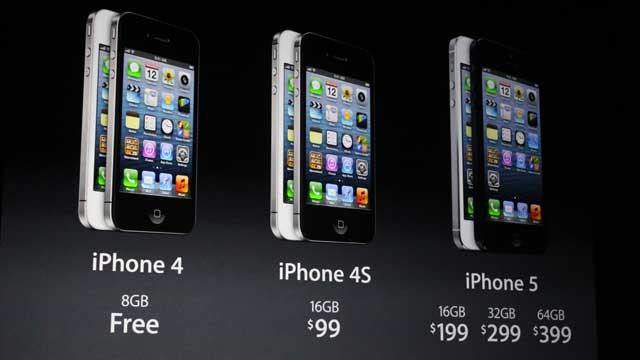
The map implementation embedded in the iPhone 5 launch, while a strategic effort to distance the company on reliance on Google, was not what was expected from Apple's (Steve Job's) perfectionist culture. Though previous iOS releases and other software had its own share of bugginess while Jobs was at the helm, the PR headaches spearheaded by Apple faithful early adopters should be alarming.  While there was incremental changes to iOS, one view is that Apple has gone conservative. When I attended Nokia World in 2011, a Nokia executive argued that Apple hasn't changed their software (UI) since it launched in 2007.  There were many analysts who countered with a logical message that basically stated the U.S. adage, "If it ain't broke, don't fix it."  There is some truth to this as it's mucking around with the Apple secret sauce that is uniform in its desktop, phone and tablet experience. It's this UI that has been the magnet and foundation for its halo products.  The UI is simple, intuitive and works. Enough said, right? Yet the UI is also the foundation for the Android OS and the OEM variants. Sure there are differences but it's pretty much alike.  Here we are in 2012 and iOS 6 is really no different than in 2007. There are incremental additions for sure. Windows Phone 8 just launched and while Microsoft is challenged with getting user traction, Windows Phone (back to 7) is radically different and some can argue innovative.  At the 1:00 minute mark, Joe Belfiore visually presents the above argument.


As an analyst, I don't really have a dog in this fight on defending any company.  However, Microsoft has really thought differently.  Will Apple need to jump ahead to show software innovation?  It should but it likely won't for at least a year or more.  They're in the driver's seat with record adoption in tablets and smartphones.  Microsoft to some extend had to think out of the box because it was losing share in mobile and desktop. Some can argue that it was defensive but again to their credit, rather than do incremental UI upgrades to Windows 7 (which were in my view incremental upgrades to Vista and XP), they had to take the offensive and take a risk and do a wholesale change.  Like Apple, the experience is uniform across its desktop, mobile and tablet hardware but the UI is so radically different.  How will the public accept this?

Back to Apple and why is it in a software innovation crossroad?  For one, it needs to stay safe and protect its growing base of users. Their UI is so well known and simple that it needs to protect any wild swings of experience.   But heartening for Apple is that Jony Ive, the SVP of industrial design (the hardware design magician) now has the 'Human Interface' responsibility. 

It will be telling in the next year or two to see where the signature Apple UI heads. To be sure, it cannot sit still for another five years.