Showing posts with label DISH. Show all posts

Monday, July 19, 2021

Impacts: DISH & AT&T's Network Services Agreement

What: DISH and AT&T signed a long term network service agreement making AT&T the primary network for its DISH MVNO brand (Boost Mobile, Ting and Republic Wireless) customers.

Though the terms were not disclosed in the DISH SEC 8-K filing, the media reports point to 10 years and worth at least $5 billion. Moreover, the agreement allows AT&T to use a portion of DISH's spectrum in various markets to help support DISH's customers on the AT&T network. Lastly, AT&T is providing transport services to support DISH's 5G network. 

Why: DISH needed to exit/held hostage to an acrimonious T-Mobile relationship prompted by the announced CDMA network sunset by January 2022.   The sunset would require DISH to convert (read handset subsidy) those legacy CDMA subs to newer compatible devices. 

When: That is an unknown on the rollover of these customers. However, it's likely before the end of 2021.

Impact:

  • DISH
    • Gets out from under the T-Mobile thumb/control despite favorable ostensibly wholesale rates when it took over the Boost branded base 
    • Likely to receive an incentive monetary sum to assist DISH move subscribers onto AT&T network  
    • Gets out of direct device subsidies of those CDMA subscribers; could use that incentive sum to help offset those devices
    • Possibly gets access to AT&T device relationships to drive down DISH's subsidy costs (near term and future) as well helping to pad the device offerings
    • Ostensibly, this AT&T wholesale deal would provide better monetary terms/outcome for DISH in order to exit the T-Mobile relationship 
    • Allows DISH to bundle wireless service with its own satellite television service (double play) allowing for increased ARPU and growth in rural communities it currently serves

  • T-Mobile
    • Loses wholesale revenue from '22 onward though the T-Mobile should have factored in DISH's 5G network buildout projections and worse case planning given the increasing symmetrical war of words    
    • Loses a customer/partner that is increasing hostile (the T-Mobile Grinch commentary). That could be construed as a good thing.
    • With 'renting' some of DISH's 600 MHz spectrum that allows for T-Mobile's vast national 5G claims, DISH could opt to terminate the spectrum leasing and leave T-Mobile with future 600 LTE & 5G coverage holes.  T-Mobile and DISH came away with a 42 month lease arrangement back in late '20.
  • AT&T
    • Gains future wholesale revenue, presumably for 10 years, and takes it away from arch rival T-Mobile
    • Gains access to DISH's spectrum in certain markets
      • Though the primary purpose was to support DISH's customers, what's to stop AT&T to also support AT&T customers?
      • Markets were not identified but likely in dense urban markets where Boost subscribers consumer service
    • Unclear whether this is relegated to just LTE connectivity or future 5G as DISH would logically have its own national 5G owner's economics 
    • Gets near term and future transport revenue for DISH's 5G buildout. This would help with some return on investment (CapEx) on the company's big multi-year fiber push and buildout 
    • Allows DISH to blunt T-Mobile rural growth as a viable competitor (if DISH can execute)   

Tuesday, November 29, 2016

DIRECTVNOW PRESS LAUNCH - 11/28/16 + GROWTH

On Monday, November 28, AT&T launched DIRECTV Now to the press and media.  DIRECTV Now represents a huge growth component for AT&T. While many people look at the details of price, number of channels, and UI/UX, all these will continually be refined as the company markets its existence. The key point here is that the foundation was the DIRECTV (DTV) acquisition that enabled AT&T to springboard beyond its flattening wireless growth and its declining wireline and satellite business units.

Also key to the DIRECTV Now success is leveraging and further exploiting all the legacy DTV content relationships. If one follows the PR content announcements, it's easy to see why there had been a flurry of activity to locking in those content partners as the lynchpin for DIRECTV Now's mainstream premium content messaging. It's also why the Time Warner merger makes so much sense in the long haul - owner's economics and continued content resale to competitors. AT&T's longterm DTV play is to compete effectively outside of its wireline footprint. That's already in motion with its DTV satellite business but in comparison DIRECTV Now's customer acquisition costs are minimal as social media will be the foundational component in this streaming service. As John Stankey put it, DIRECTV Now is going after underpenetrated subscribers that do not want to have a longterm wireline contract, are transient/mobile and may not pass credit checks. These are the same traits for subprime, prepaid and millennial demographics.

PRICING

One of the biggest question marks was the package pricing as only a $35 price point had been leaked earlier. Well, there are two $35 price points - one promotional and the other, 'permanent.' The promotional price will certainly draw a great deal of interest and potentially eat into cable & Verizon FiOS bundles - double and triple plays, especially when the consumer can save money on the set top box/DVR rental (i.e., I pay $12/mo).


DISTRIBUTION

I give AT&T's DTV folks credit in lining up all the relevant distribution partners of the DIRECTV Now app - on Apple TV, Roku and Amazon Fire TV (Chromecast is missing - I guess for now) as well as in the expected iTunes and Google Play stores. The Apple allure will be a huge driver for DIRECTV Now's success with Prepaying 3 months of service and receiving a free Apple TV.

One other surprising and disruptive approach is aligning with LeEco, the emerging Chinese consumer brand of smartphones and televisions. Here, a DIRECTV Now subscription is thrown in (terms vary by device). This DTV/LeEco deal will surely go a long way to build LeEco consumer brand awareness faster and more impactful than that of Huawei, ZTE, OnePlus, etc.

I can go further in the UI/UX but that's for another post.

Monday, March 24, 2014

More U.S. Spectrum Thoughts with RCRTV

RCR followed up the previous U.S. spectrum webinar with a RCRTV session in which Dan Meyer (Editor in Chief of RCR Wireless News) , Jeff Silva (Medley Advisors) and I go into different topics. Some of these included the H-block spectrum auction/DISH strategy, unlicensed spectrum/3.5GHz, regulatory progress, Cable WiFi, etc.

Wednesday, March 12, 2014

RCR Wireless Webinar on Spectrum (U.S.)

I took part in an RCR Wireless Webinar entitled : Spectrum Economics - The Emerging New Paradigm of Spectrum Use

Spectrum is the lifeblood of the wireless telecommunications space, and with a finite resource straining to serve an increasingly data-hungry consumer base, the pressure is on to free up new assets, for carriers to get their hands on what’s available and for equipment vendors to find more efficient ways to use what’s available. RCR Wireless News will take a look at the current spectrum market, from the ways the federal government is trying to free up spectrum, to the importance of current spectrum auctions and looking at developments in technology and small cells designed for greater efficiency.


What You Will Learn: 
How the wireless industry values wireless spectrum and ways in which vendors and wireless carriers are trying to squeeze more efficiency out of current supplies. Also a view on how the federal government is looking to free up more spectrum for non-conventional uses.

Who Should Watch: 
Those involved with network planning, including small cells and non-traditional networks. Also, those involved with roadmap planning for wireless carriers, vendors and equipment providers. 

Moderator: Dan Meyer, Editor-in-Chief, RCR Wireless News 
Analyst Angle: William Ho, Principal Analyst, 556 Ventures
Panelist: Jeffrey S. Silva, Sr. Policy Director, Telecommunications, Medley Global Advisors
Panelist: Steve Berry, President and CEO, Competitive Carriers Association

Register at RCR Wireless here to hear it.

Thursday, June 27, 2013

DISH Folds & Some DISH Options

Poker 

As the long multi-hand poker game with Sprint, DISH, Softbank and Clearwire dragged on with DISH upping the ante, forcing Sprint and Softbank to push, DISH folded on both deals in the end.

DISH's game to takeover Sprint ended on June 18, 2013 when they withdrew their offer. The press release language implied that they will devote their resources to win Clearwire. It didn't look bad when the Clearwire board recommended DISH's offer back on June 12. 
But with a higher Sprint offer on June 20, the coup de grace came several days later on June 24 when the Clearwire board reversed its DISH recommendation for Sprint's offer.  


DISH folded on its second poker hand with yesterday's June 26 announcement. Many including me, expected another run, upping the ante, given DISH's playing profile but what did it have to gain? Really - nothing.

DISH's Options

The near term scenario is that DISH needs to get service up and running. Any time you're delayed means lost future revenue opportunity. With its core business slipping, there is urgency to get into the mobile space. Given this line of thought, it needs to bury the hatchet with Sprint and move to spectrum hosting.

A long term scenario is that DISH can wait until an alternate hosting provider comes on line. T-Mobile has been bandied about as that partner.  But why not Verizon Wireless and AT&T? Everyone wants access to new spectrum and if the deal is right, anything is possible. 

Regardless of scenario, DISH and a partner(s) need to seed the mobile ecosystem on DISH's bands. Technically, it may not be a stretch. However, the lead times to quickly  create/productize the chipsets and integrate into production hardware (device and infrastructure) are still an issue. Once it joins the mobile service provider club, DISH can upsell its own customers on mobile broadband (either fixed or mobile) and wholesale its capacity.  

Looking ahead, DISH is looking for another game but it may not be poker. 


Friday, June 21, 2013

The Finish Line is Close for Sprint

No one expected the level of drama and the maneuverings among Sprint, Clearwire, Softbank and DISH. To be sure, the stakes were high for all parties. A poker game analogy is appropriate as this corporate soap opera has seen its share of raised bids and stare downs.


DISH with Charlie Ergen at its helm played the classical disruptor, raising the stakes on its bid on both Sprint and Clearwire. It's logical since the DISH core business is sliding and DISH has no access to any mobile opportunities (revenue).  Though DISH has its own spectrum, it doesn't have the ability to launch service on its own. With Sprint's Network Vision strategy, DISH can ride the Sprint host with lower capital expenditure than if it built a network from scratch. But Sprint has a revenue generating subscriber base and direct sales channels that DISH can tap into if it own Sprint.  However, with a deeper pocketed Softbank raising the ante, DISH needed to fold and focus on a less capital intensive deal - Clearwire.

However, Sprint "pulled a DISH" and raised its bid for Clearwire at the last minute $5/share vs $4.40.  This reversed a Clearwire board recommendation for DISH. Let's face it, money talks and with that, the activist investors were placated. After all, they were looking to maximize any bid anyway. What didn't hurt was Sprint's lawsuit against DISH and Clearwire citing the illegality of the DISH offer.   Sprint is near the finish line to realize 100% ownership of Clearwire, unless DISH "pulls another DISH." 

The real question if the Sprint-Clearwire deal makes it is what are DISH's options to get into the mobile space and monetize its spectrum? Will Sprint and DISH bury the hatchet? In my view, they have to. DISH still needs to make use of its spectrum and Sprint is the logical partner (at this moment) since Network Vision was created for spectrum hosting. Though Sprint said in the past, wholesale revenue wasn't totally baked into the Network Vision model, any wholesale money (a fleeting LightSquared) will help its return on investment. Of course DISH can court T-Mobile, but they're focusing on its own LTE buildout. Moreover, they haven't planned for spectrum hosting. We shall see............. 


Wednesday, December 12, 2012

DISH Has Terrestrial Approval - now what?!

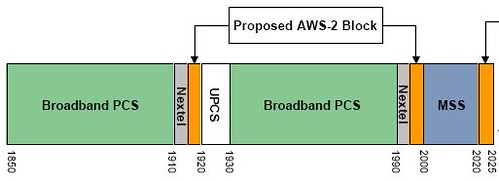
Now that the FCC has approved terrestrial use of DISH's 40 MHz of spectrum (2000-2020 MHz and 2180-2200 MHz), what are its options?


1. Build it out - it's capitally intensive to build out a national network so a wireless carrier partner is necessary.  Why a carrier? It's in their core competency to implement and run networks.  Sprint is in the best position to meet DISH's wireless buildout goal with its Network Vision (spectrum hosting capability) strategy.  Stating the obvious - having a carrier such as Sprint host allows DISH to bring services up quickly and minimize a huge self-built price tag.

2. Sell the spectrum - getting money in the short term is always desirable.  But as the industry has seen, spectrum will always appreciate.  Yet there's been precedence for this. Spectrum Co (cable companies) sold its AWS spectrum to Verizon Wireless. They realized an appreciation in the base price from when they bought it in 2006.  More important aside from the money, cable companies (Cox, Comcast, Bright House and Time Warner) has strategic wireline and wireless possibilities with Verizon/Verizon Wireless.  With this in mind, DISH could cut a sale deal and wholesale at favored rates from the buyer. Presumably, the spectrum buyer will be a wireless carrier. Sprint would make the most sense.

BUT........
 
Don't forget the devices that will run on the DISH spectrum. Device and chip makers haven't exactly created product yet to meet this need. There is a ramp up time to incorporate it into the product portfolios. It doesn't happen overnight - look at the time in which Sprint/Clearwire announced TD-LTE 2.5 GHz support to when devices will have that band and technology incorporated.  This is a factor in both the above scenarios.

Let's see what DISH does......... 

Monday, December 10, 2012

Why Sprint + DISH Makes Sense

Today's Bloomberg report  suggesting a possible deal where Sprint hosts DISH's spectrum is logical. While DISH has held this spectrum for some time, they have yet to throw services on it. DISH needs a mobile component as all their fixed line rivals (e.g., AT&T, Verizon and Cable Cos) have or will have mobile capability.  The media and industry speculation with Google in mid-November has yet to materialize.

Keeping Up with Competitors

From a fixed line view, these competitors are pushing for subscribers being able to access content in any device (i.e., smartphones, tablets, PCs, TVs, cars?). Of course the service provider will love to upsell an alternate access medium to customers. While DISH is a capable satellite provider, it has little experience in the terrestrial side. A national buildout of their MSS spectrum would be capital intensive and outside of their core competency. 

Enter Sprint

Sprint's big bet in their 2010 Network Vision strategy that hosting spectrum would be an element of its wholesale strategy. There was much promise as then cable company (SpectrumCo)  partners had a near national AWS footprint and Clearwire needed a platform to expand to new markets. So far, only the nearly defunct LightSquared was the only shortlived spectrum hosting deal. Therefore, any spectrum holder who needed to bring up service is fair wholesale game.  With the Softbank cash infusion,  Sprint has publicly stated that it has the flexibility to do more things.  Aggressively courting DISH and hosting MSS spectrum should be a no-brainer despite any previous tension on MSS spectrum interference with with Sprint PCS operation.

Possibilities

It's an inevitability that MSS will run LTE. If MSS bands were to increase Sprint's LTE capability beyond their 5X5 channel implementation, a wider LTE band helps Sprint LTE capacity allowing Sprint's Unlimited data proposition to extend. Speed is another factor in which channels can be aggregated to provide a fatter LTE pipe.  

A DISH deal allows for a long term alternative (and a lever) to being locked in with Clearwire's TD-LTE. At a minimum, a DISH+Sprint PCS/MSS LTE pipe complements  any data offload.

Friday, November 16, 2012

Building a National Wireless Network - DISH & Google?!

While the Wall Street Journal reports that Google and DISH are in talks to build a wireless (presumably national) network, the media pickup on this is interesting. To be sure, it makes good for good reading. Google has tried to expand from its core search/advertising business before. The Android OS is probably its greatest success in the mobile space, more so than its hardware statements in Nexus smartphones and tablets.  The Chromebook is great concepts to dovetail with the cloud craze the industry and business community is all really keen on these days.

People can also point to Google's capabilities in building data centers and fiber networks.  The biggest testbed for a hardcore service provider play is in the suburbs of Kansas City with Google Fiber. There is no doubt that Google has the deep pockets and some technical capability to embark into the wireless service provider game.  However, it lacks the expertise as it's outside Google's core competency.  Though it may be true that they can acquire the talent, a national network is no small feat and tremendously capital intensive.  Google's signaled its intention to play in wireless sector in 2007 with Auction 73 (700 MHz spectrum). 

This time DISH has the spectrum and it needs a buildout partner.  DISH is a service provider and has the correct service culture but it doesn't have any terrestrial cellular expertise.  It would make better sense that DISH would approach an existing national carrier to host its spectrum.  Sprint's Network Vision was built for this scenario. 

One cautionary tale is Cox's attempt with its own AWS spectrum.  After a year or so, the company exited the wireless retail business.  Incumbent wireless/cellular carriers have the towers, tower relationships, right of way clearance expertise and backhaul networks.  Google does not have any of this except perhaps the fiber/IP backhaul as a critical component. If DISH finally delivers on a wireless service promise, Google may not be the entire infrastructure builder but perhaps a funding partner with a formidable IP backbone.